

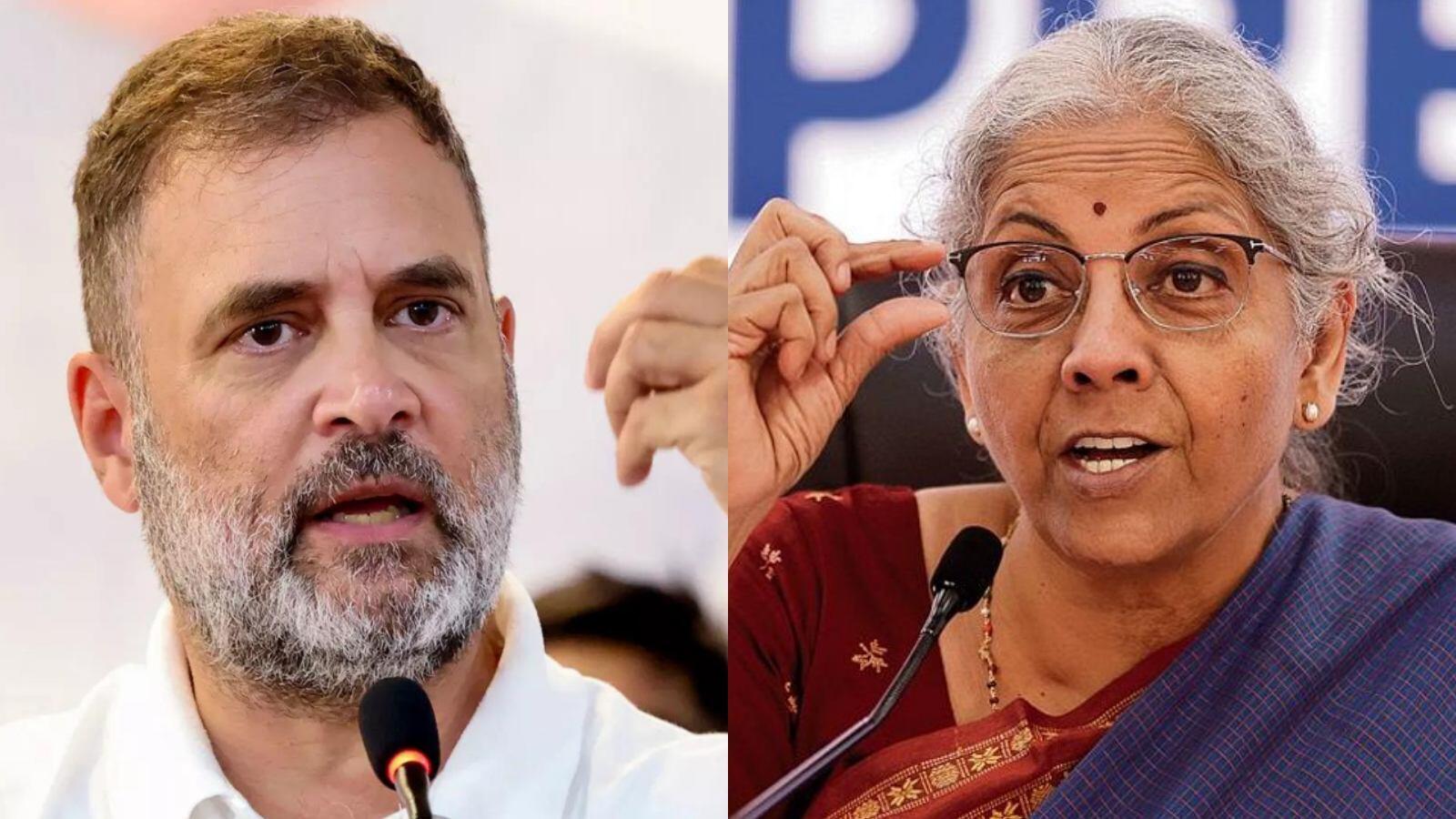
The ongoing Tata Group controversy has sparked a fierce political exchange between Union Finance Minister Nirmala Sitharaman and Congress leader Rahul Gandhi. The dispute centers on the reappointment of N. Chandrasekaran as Executive Chairman of Tata Sons, which has led to sharp accusations from both sides.
The Tata Group Controversy
Tata Group, one of India’s most respected business houses, is currently embroiled in internal conflict. The immediate cause is the decision to reappoint N. Chandrasekaran as Chairman of Tata Sons. Noel Tata, head of Tata Trusts, has questioned this decision, raising concerns about procedural irregularities in the appointment process.
On October 26, Noel Tata sent a letter to Tata Sons’ company secretary, alleging that proper protocol was not followed. He accused the board of bypassing the nomination committee’s recommendations and demanded detailed minutes of board meetings and voting records. This challenge to the reappointment has intensified legal and political debates surrounding the matter.
Political Clash Between Sitharaman and Rahul Gandhi
Finance Minister Nirmala Sitharaman had earlier advised Rahul Gandhi to avoid politicizing the Tata dispute, telling him to stop “seeing ghosts everywhere.” She warned that not every business or legal issue should be immediately branded criminal. Sitharaman also attacked Congress’ political history, claiming decades of license-quota regulation under their rule stifled Indian entrepreneurs and kept the country in poverty.
Reacting sharply, Rahul Gandhi accused the government of “criminally ruining” the Tata Group and questioned why representatives from Tata Trusts and Tata Sons were summoned to Home Minister Amit Shah’s residence. He sarcastically asked when the government’s “cronies” would enter the game and which part of Tata would be handed over to them. Rahul stated that except for a few favored industrialists, most businessmen are frustrated with government policies, implying that many already harbor animosity against the current political establishment.
The Congress leader initiated the controversy through a social media post targeting the central government, Prime Minister Narendra Modi, and Home Minister Amit Shah. He alleged that the historic business group was being destroyed deliberately and that fear among business leaders prevented them from speaking out. Rahul emphasized that Indian industry should not be treated as a “puppet” of political leaders and vowed to resist what he called arbitrary government actions.
Throughout these exchanges, the dispute has broadened to question the government’s role in business affairs and the balance of political power over industrial matters. The focus remains on Tata Group’s governance and its implications for India’s wider business climate.
As the legal and political confrontation continues, detailed investigations and regulatory scrutiny of the appointment process are awaited. The conflict highlights broader tensions between the ruling party and opposition on economic and corporate governance policies in India.
For now, the tussle between Tata Trusts’ leadership and the government-backed Chairman Chandrasekaran remains unresolved, keeping the spotlight on India’s top industrial house amid growing political rhetoric.