

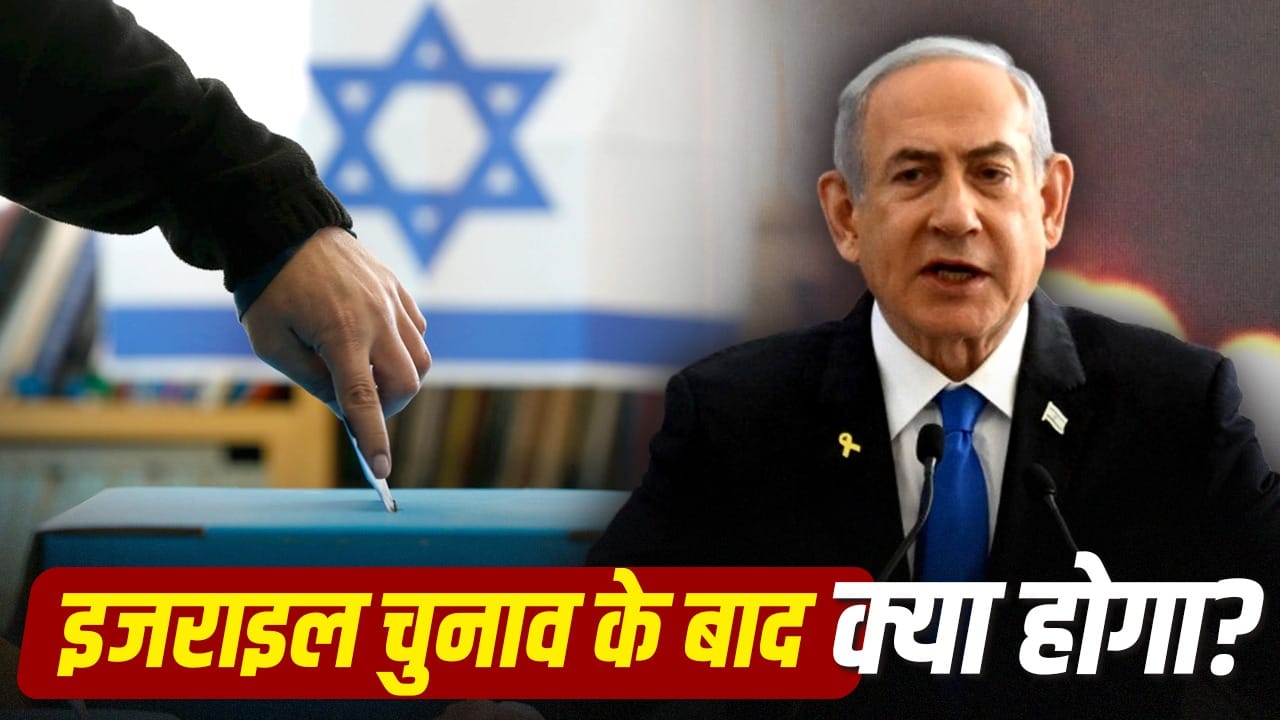
Israel is set to hold its general elections on October 27, where all 120 seats in the Knesset will be contested. Prime Minister Benjamin Netanyahu’s hold on power is at stake as parties and alliances compete for the majority. The crucial threshold is securing the support of at least 61 lawmakers to form a government. Recent polls suggest Netanyahu’s religious-nationalist alliance might win 50 seats, while the opposition could secure around 52 seats. Additionally, Arab parties are projected to gain about 13 seats, which could heavily influence coalition-building. However, these are predictions, and election results could differ.
Coalition Building and Election System
Israeli voters cast their ballots for parties rather than individual candidates. Seats in the Knesset are distributed proportionally according to votes received. Parties must cross a minimum 3.25% vote threshold to earn representation. After the election, negotiations to form a coalition government begin. Even the leading party does not guarantee it will lead the government unless it can gather enough allies.
8 Possible Outcomes for Forming the Next Government
Despite trailing in polls, Netanyahu’s Likud party may still attempt to build a government by rallying support from allied factions such as Otzma Yehudit, Religious Zionism, and the ultra-Orthodox parties Shas and United Torah Judaism. If these groups unite, Netanyahu could return as prime minister.
On the other side, four major opposition parties have agreed to contest together and aim to form a government. These include Gadi Eizenkot’s Yashar party, Yair Golan’s Democrats, Avigdor Lieberman’s Yisrael Beiteinu, and Naftali Bennett and Yair Lapid’s Together alliance. The opposition will need additional support to reach a majority. Although Eizenkot is seen as a likely prime minister candidate, the opposition has not officially chosen a leader.
The Arab party Ra’am, which represents Israel’s Arab citizens, could play a pivotal role. Its leader Mansour Abbas has not ruled out supporting the opposition. His priorities include combating violent crime in Arab communities and addressing discriminatory housing policies. However, some opposition leaders oppose formally partnering with Arab parties, complicating potential alliances.
Other Government Formation Scenarios
If no coalition achieves a majority, a minority government could be formed, relying on outside support for confidence votes. The Joint List has hinted at backing an anti-Netanyahu coalition this way but demands steps toward Palestinian statehood and action against organized crime. Such a government could face instability due to shifting support.
Another possibility is a national unity government, where rival parties join forces during a crisis. Netanyahu and Benny Gantz had formed such a government in 2020 after several inconclusive elections, though it lasted only a year. Since the Hamas attack in 2023, Gantz’s party had joined Netanyahu’s government, but future cooperation depends on negotiations and policy agreements.
Parties could also agree to rotate the prime ministership between two leaders in a power-sharing deal. Netanyahu and Gantz had planned this in 2020 but it collapsed. Similarly, Naftali Bennett and Yair Lapid agreed to share the post in 2021. Rotation remains a viable option again.
If coalition talks fail to agree on Netanyahu or an opposition leader, they might choose an alternative prime minister from within their political camp, someone more acceptable to coalition partners. Any prime minister needs the Knesset majority’s support to govern effectively.
Failing to form a government could force Israel into yet another election. Between 2019 and 2022, Israel held five elections due to political deadlock. If no deal is reached this time, political uncertainty will rise. Until then, Netanyahu will remain as caretaker prime minister.
Key Factors That Will Decide
Three main issues will shape the post-election government: how many seats each alliance wins, whether Arab parties choose to support a coalition, and whether opposition factions can overcome internal differences. While the opposition seeks to unseat Netanyahu, disagreements over working with Arab parties complicate their efforts. At the same time, Netanyahu’s traditional allies may prove crucial to his chances.
Government formation continues after election day, with parties having 28 days—extendable by 14 days—to build a coalition. If no government emerges, new elections will be called. Thus, the October 27 results will only begin to reveal the final power composition, which coalition talks will eventually decide.