

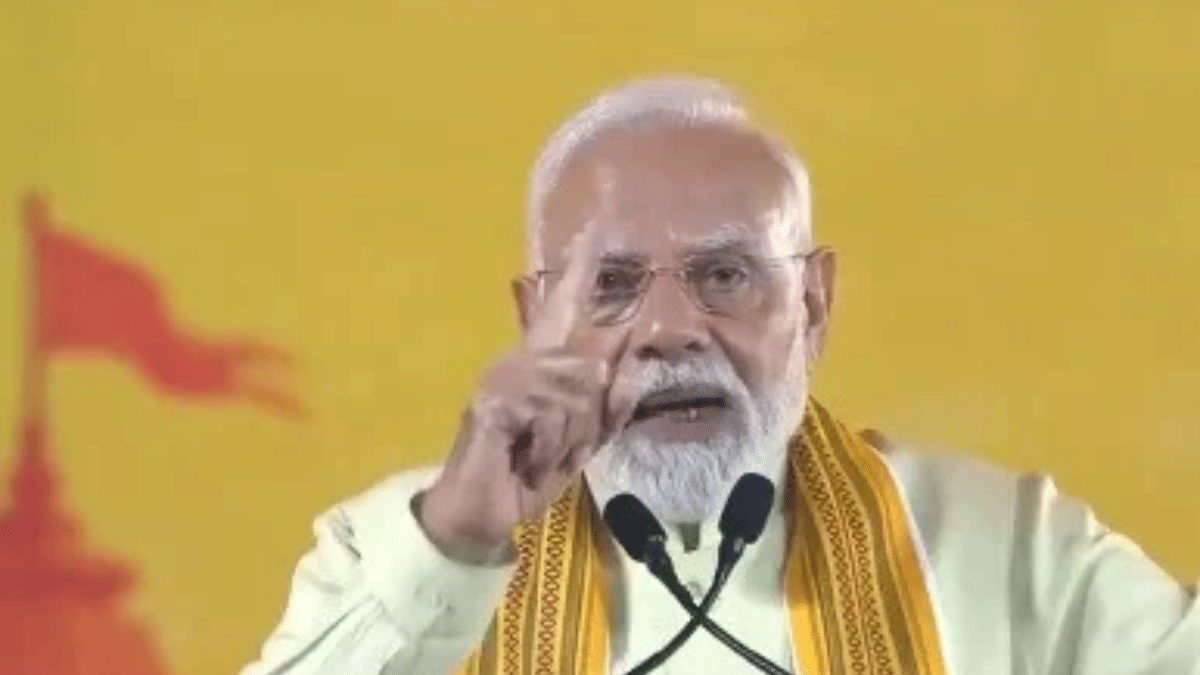
Prime Minister Narendra Modi delivered a powerful message at the Dussehra celebration, highlighting Lord Ram’s ideals and calling for unity against enemies of the nation.
Lord Ram’s Ideals Guide Governance
At the Dussehra celebrations held at the DDA Utsav Ground in IP Extension, New Delhi, PM Modi said the concept of ‘Ram Rajya’ remains a model of good governance based on justice, equality, and welfare of the public. He emphasized that these ideals continue to inspire governance today.
“Ram Rajya is a system of administration where there is no discrimination, justice is available to all, equal opportunities are provided, and the goal of power is to serve the people,” he said. The Prime Minister called for treating the public as divine and prioritizing service to the poor and deprived.
Victory of Truth and National Unity
During his address on Vijayadashami, the PM greeted citizens and described the festival as a symbol of truth triumphing over falsehood and the end of tyranny. He invoked Lord Shri Ram, Mother Janaki, and Bajrangbali, highlighting the country’s deep-rooted traditions through Ramleelas that keep these ideals alive.
PM Modi stressed the importance of unity, stating, “All institutions of the nation and political parties must stand united to protect national interests and confront enemies who harm the country, divide society, and hate cultural values.”
Self-Reliance and Determination
The PM drew parallels between Lord Ram‘s journey to Lanka and modern India’s challenges, urging citizens to rely on their own strength and resources instead of depending on others. He noted the power of collective effort and faith in overcoming difficulties and achieving seemingly impossible goals.
Preserving India’s Cultural Heritage
Highlighting efforts to reclaim and preserve historical artifacts, PM Modi stated that over 650 ancient idols have been brought back to India in the last 12 years. He connected national self-respect to cultural heritage and the work being done to restore India’s global cultural identity.
Concluding Message
Closing his speech, the Prime Minister reaffirmed the spirit of Vijayadashami as a celebration of victory and courage. “No matter how powerful the enemy, standing with truth and humanity ensures ultimate victory,” he said, reinforcing the festival’s deep significance in India’s philosophy.