

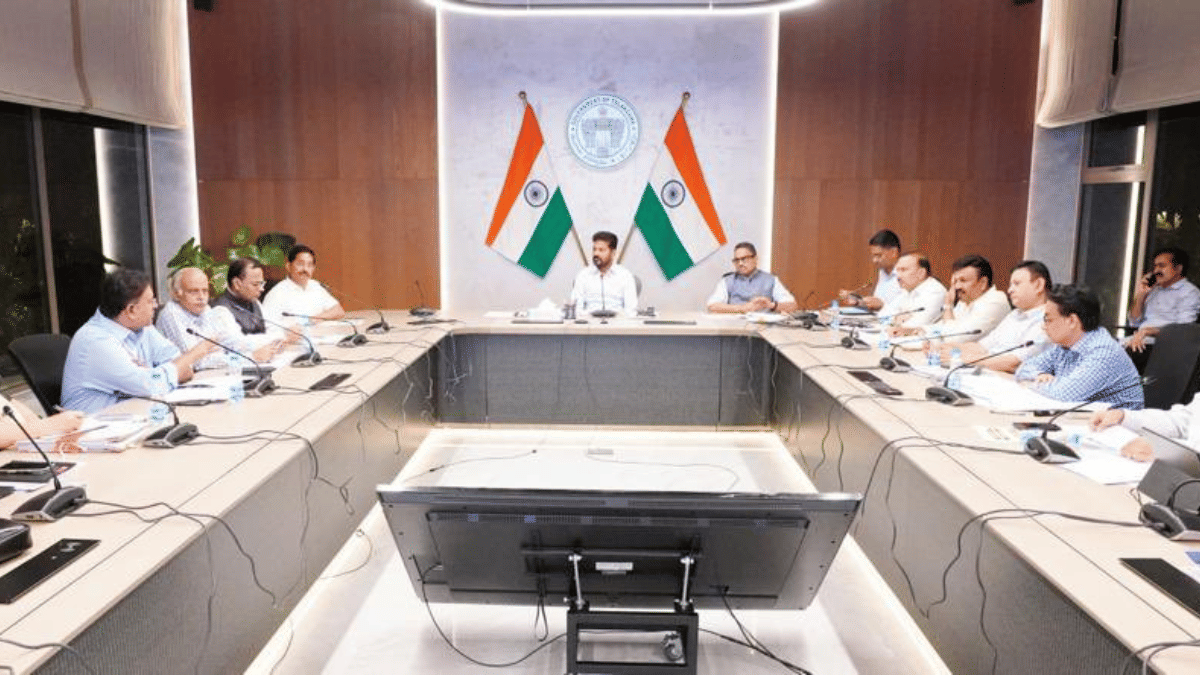
Telangana Chief Minister Revanth Reddy has appealed to farmers to defer one seasonal crop cycle, especially the water-intensive Yasangi (Rabi) paddy, due to the severe water shortages caused by the El Niño phenomenon. This request aims to conserve water and power resources, but it has sparked strong opposition from the farming community and political rivals.
Chief Minister’s Appeal to Farmers
During a press conference, Revanth Reddy stressed the importance of collective action during natural disasters. “We have to think beyond politics and join our hands on mission mode so no one is left behind. Save water, save power. This is our magic mantra,” he said.
He compared the current situation to the COVID-19 pandemic, urging citizens to follow the “save water, save power” mantra until rains return in July 2027.
The CM highlighted that reservoir levels have dropped drastically to 200 TMC against a normal 462 TMC, forcing a prioritisation of drinking water over agriculture.
Reddy requested farmers to defer one crop this season, saying, “You have given us food whenever we needed it; please give us some water too.”
Water Scarcity and Statistical Overview
Deputy Chief Minister Mallu Bhatti Vikramarka and Revenue Minister Ponguleti Srinivasa Reddy supported the CM by presenting alarming statistics. Reservoirs in the Krishna basin are down by 72 percent, and the Godavari reservoirs show a 42 percent depletion compared to last year.
Rainfall from June 1 to October 1 was 615.6 mm, an 18 percent drop from the usual 746.3 mm, reports the Telangana State Development Planning Society.
Farmers have planted paddy on 53 lakh acres, 13 lakh acres less than last season, but the CM warned these levels are still unsustainable for the months ahead. He encouraged a shift to horticulture or palm oil cultivation instead.
Farmer Protests and Political Backlash
The announcement has deeply upset Telangana’s rural farmers. Protests erupted statewide with acts such as burning crops and effigies of the CM.
In Khammam, farmers leasing land criticized the government for failing to implement the Rythu Bharosa scheme. Vissa Kiran of the Samyukta Kisan Morcha Telangana called the appeal a “devastating betrayal” and accused the government of breaking promises made by Rahul Gandhi regarding uninterrupted power and farm support.
The Congress party had earlier announced a ‘Warangal Declaration’ with 34 promises for farmers, including loan waivers and crop insurance. However, criticism mounts due to delays and unmet commitments in these pledges.
The current government has missed at least four Rythu Bandhu instalments across crop seasons.
Criticism from Opposition and Analysts
The BJP’s Kondapally Sridhar Reddy blamed the government for poor planning and failure to secure power and water resources despite clear warnings about El Niño.
Bharat Rashtra Samithi leaders argue that the government is unfairly shifting blame onto farmers to cover its own systemic and infrastructural failures.
T. Harish Rao, former irrigation minister, charged the current government with neglecting major irrigation schemes and failing to support farmers with MSP payments for Kharif crops.
Compensation and Future Plans
Farmers are notably unhappy with the government’s lack of clear financial help for lost income or horticulture crop shifts. The CM mentioned support for agricultural labourers through the VB-G RAM G scheme focused on irrigation and nala work but gave no specific compensation details.
M. Kodanda Reddy of the All India Kisan Congress expressed hope that additional benefits would be announced soon, highlighting upcoming political consultations and efforts to request central assistance for the drought-affected state.
Power Demand and Coal Shortage
Deputy CM Bhatti Vikramarka revealed power demand in October has surged from a normal 15,000 MW to over 20,000 MW, increasing pressure on resources.
BJP representatives criticized the government for not anticipating this shortage and failing to secure power purchase agreements with neighbouring states.
Further complications arise as the state-owned Singareni Collieries faces coal stock shortages, adding to the crisis as winter approaches.