

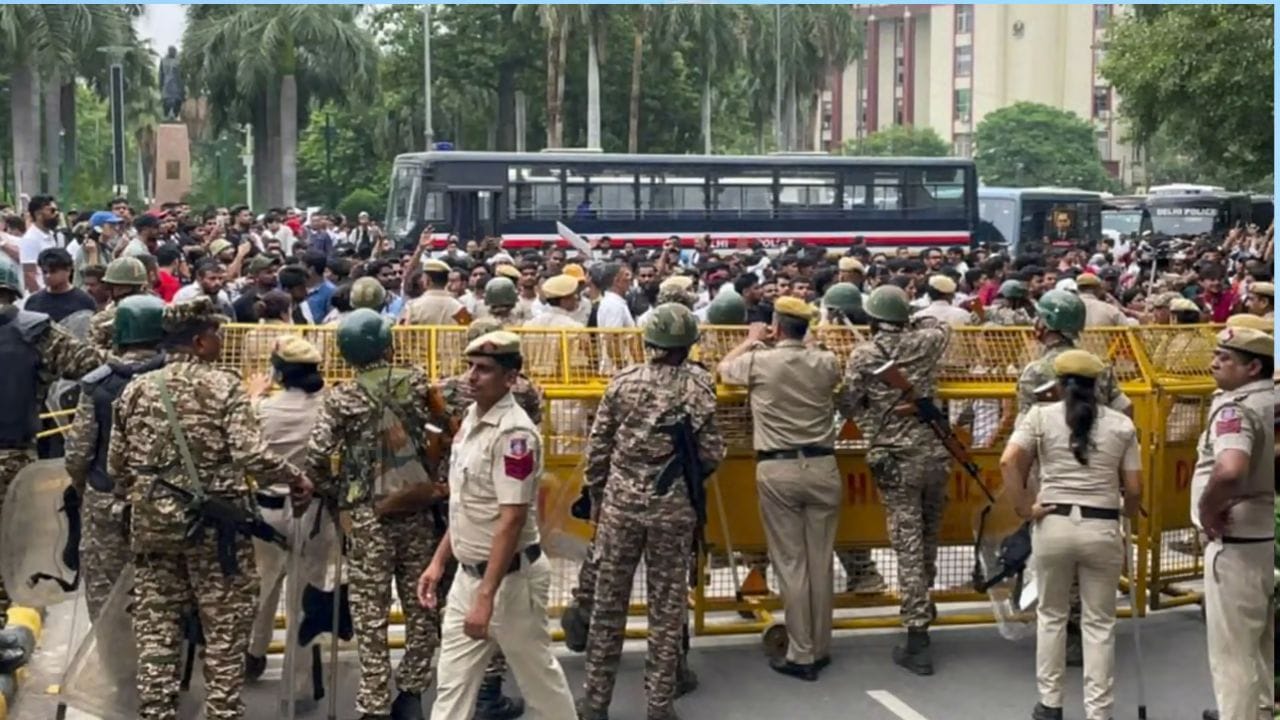
Delhi’s markets are enduring significant losses due to ongoing protests during the festival and wedding seasons, with daily business estimated to be affected by around ₹250 crore. This issue has escalated to the Supreme Court, highlighting the economic impact caused by restricted access and reduced customer footfall in key market areas.
Supreme Court Hearing and Petition Details
The case reached the Supreme Court after a petition filed by the Delhi Kirana Committee and the Delhi Iron and Hardware Merchants Association under Article 32 of the Constitution. Advocate Jai Anant Dehdrarai presented the petition, calling for unhindered trade and movement in major Delhi markets during these crucial months.
Chief Justice Suryakant acknowledged the issues faced by small shopkeepers, hawkers, and stall owners due to the disruptions. He assured the court would take appropriate action to address their concerns while balancing other rights.
Economic Impact and Business Concerns
According to trade groups, Delhi’s daily commerce during this season ranges between ₹500 and ₹600 crore. Protests, processions, and road blockages potentially disrupt approximately half of this amount, severely affecting the livelihoods of not only shopkeepers but also employees, hawkers, suppliers, and daily wage laborers.
The petition also references an official notification by the New Delhi Municipal Council (NDMC) to close Central Park in Connaught Place on October 16 and 17, further complicating market access. Traders emphasize that such barriers reduce customer traffic and hit earnings across the board.
Sumit Agrawal, National Joint Secretary of the Confederation of All India Traders (CAT), clarified that the petition does not seek to curb peaceful protests but aims to ensure a fair balance between the right to demonstrate and the right to livelihood and free movement.
The petition requests the court to direct smooth traffic flow in prominent markets like Chandni Chowk, Sadar Bazaar, Connaught Place, and Khan Market from October 2026 to January 2027. It also urges the establishment of designated protest areas away from marketplaces, regulated timings and methods for demonstrations, and the development of a Standard Operating Procedure (SOP) to maintain market access during protests.
CAT estimates that over ten lakh business establishments in Delhi support the livelihoods of more than one crore individuals. Furthermore, around five lakh traders from other states visit Delhi daily for business. With the festival and wedding season being among the busiest sales periods, any decline in sales threatens the ability to cover rents, wages, EMIs, and other expenses for many small shopkeepers.
CAT is planning a meeting with leading trade bodies in Delhi to devise a joint strategy to maintain market accessibility and minimize disruptions during protests. The hope is to find solutions respecting constitutional rights without harming business activity or public movement.

