

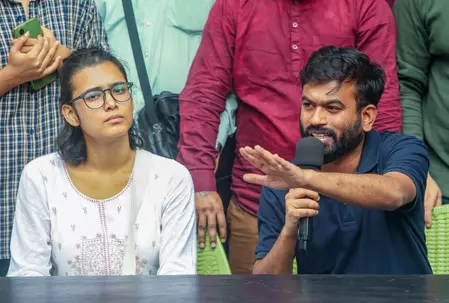
Abhijeet Dipke, founder of Cockroach Janata Party (CJP), and Neha Bora, the national president of the All India Students Association (AISA), have been taken into custody by the Delhi Police, triggering significant controversy. On Friday, CJP claimed via the social media platform X that Dipke was taken to an unknown location, and they have lost contact with him. The party also alleged that Dipke was being denied access to lawyers.
Uncertainty Surrounds Custody
CJP expressed serious concerns over Dipke’s whereabouts, questioning the police’s silence about his location. The CJP’s official X handle posted that Dipke was taken to an undisclosed place and contact with him has been lost. Furthermore, the party accused the authorities of restricting his communication with legal counsel.
The CJP criticized the government for treating youth activists like terrorists, asserting that young people are equal citizens of India entitled to constitutional rights and protections. Dipke reportedly left home holding the Indian national flag. The party questioned how carrying the flag could be viewed as a crime and demanded clear information on Dipke’s location from Delhi Police.
Concerns Raised Over Neha Bora’s Detention
In the meantime, AISA has voiced its distress over the detention of its national president, Neha Bora. The organization stated on X that Bora is being held alone at the Anti-Narcotics Task Force in Mangolpuri. According to AISA, there was no contact with her until around 8 PM, and her colleagues were not permitted to meet her. They highlighted that seven to eight plainclothes officers were present outside, barring access.
Both CJP and AISA’s posts have raised urgent questions about the conditions and locations of Dipke and Bora while in custody. The silence from police has deepened the concerns of these groups and their supporters.
Adding to the pressure, former Tamil Nadu Chief Minister M.K. Stalin raised questions publicly about the whereabouts of both activists. Stalin condemned their detention without disclosure of location as unlawful and inhumane. He demanded their immediate release and urged the central government to cease efforts to suppress peaceful protests.
Earlier on Friday, the Delhi Police arrested Dipke while he was heading to a proposed ‘Tiranga Sabha’ at Central Park, Connaught Place scheduled for 5 PM. Dipke organized this gathering in protest against the arrests of CJP co-conveners Sourav Das and Ashutosh Ranka.
Shortly after Dipke’s arrest, Neha Bora was also detained near Mandi House. She was on her way to join the CJP’s ‘Wave the Tricolor’ protest alongside AISA and other left-wing group activists.
The Delhi Police had previously issued two notices warning Dipke not to hold the assembly at Central Park, citing that the New Delhi Municipal Council had not granted permission and forbidding any gathering due to strict prohibitory orders. Police warned of legal action for violating these orders.