

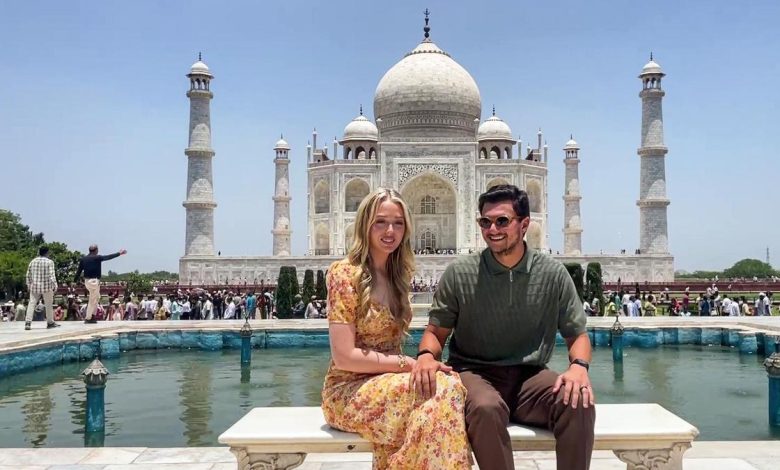
Agra, India – Tiffany Trump, the daughter of former U.S. President Donald Trump, recently visited the Taj Mahal, one of the world’s most iconic monuments. Accompanied by her husband, she took time to explore the rich history and stunning architecture of this UNESCO World Heritage site, attracting considerable attention amid heightened security in the region.

The Taj Mahal, built in the 17th century by Mughal Emperor Shah Jahan in memory of his wife Mumtaz Mahal, is widely regarded as a symbol of love and is visited by millions of tourists annually. Tiffany Trump’s visit comes as part of a broader interest in India’s cultural landmarks. Visitors and officials alike noted the respectful and curious approach she took during her tour.
Her visit was marked by robust security arrangements, reflecting both the significance of the monument and the high-profile nature of her presence. Local authorities worked closely with federal security agencies to ensure a smooth and safe visit, minimizing any disruptions for other tourists and residents in the area.
Tiffany and her husband spent several hours exploring the grounds of the Taj Mahal, admiring its intricate marble inlay work and the symmetry that has fascinated architects and historians alike. They were also reportedly briefed by local guides on the history and cultural importance of the mausoleum during their tour.
The visit has drawn media attention both nationally and internationally, highlighting the ongoing cultural exchange and tourism interest between the United States and India. Experts say such visits contribute positively to bilateral relations by fostering deeper appreciation and understanding of each country’s heritage.
Residents of Agra expressed pride in showcasing the Taj Mahal to global visitors, especially those from influential backgrounds. The Taj Mahal remains not only a testament to India’s rich history but also a symbol that continues to inspire people across the world.
As Tiffany Trump’s visit concludes, it reinforces the enduring appeal of the Taj Mahal and underscores the role of cultural heritage sites in connecting people from diverse backgrounds through shared appreciation of art and history.