

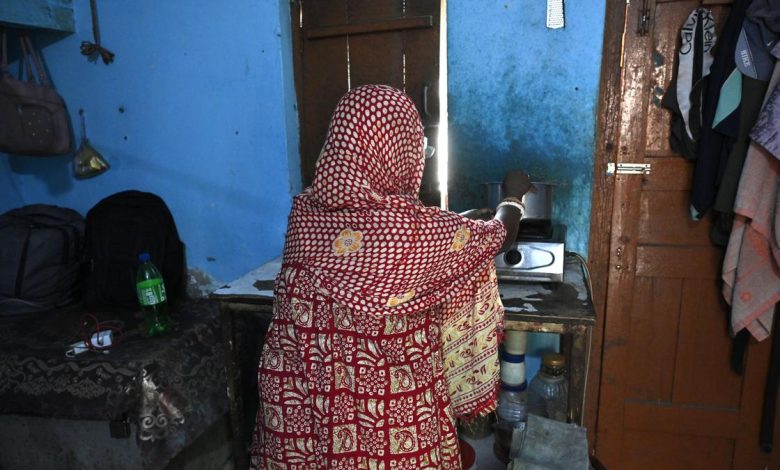
Last month, the Uttar Pradesh government announced a significant increment in the minimum wage after a period of 12 years. The raise amounted to ₹2,377, providing a much-needed relief to many workers across the state. However, those employed in Noida’s Special Economic Zone (SEZ) express that despite this increase, their financial realities remain challenging. The new wage level of ₹13,690 scarcely covers basic living expenses, leaving almost no room to save or improve their future prospects.

Reports from various sectors within the SEZ indicate that workers are facing increased cost-of-living pressures, making survival on the revised minimum wage difficult. For many, the rise in income has been quickly offset by inflated housing rents, transportation costs, and daily necessities. As a result, the incremental benefit has been largely absorbed by escalating expenses, limiting workers’ ability to enhance their quality of life.
Shrimansi Kaushik, a social analyst focusing on labor issues, notes that the shrinking of workers’ spaces and aspirations is a worrying trend. “The wage increase is a positive step, but it does not translate into substantial social or economic upliftment for many laborers,” she explains. “Their living conditions remain constrained, and aspirations for better education, healthcare, and housing have been suppressed over time.”
Local labor unions echo these concerns, calling upon policymakers to take a holistic approach toward workers’ welfare rather than only adjusting wages. They urge for improved social security measures, affordable housing schemes, and easier access to healthcare and education so that the minimum wage does not merely act as a subsistence level but as a foundation for a more dignified life.
Economic experts suggest that while the wage increment is a step forward, addressing inflation, rising real estate prices, and social infrastructure is necessary to genuinely improve workers’ living standards. The present situation raises questions about sustainability and equity in India’s rapidly urbanizing industrial zones.
In Noida’s SEZ, where many migrant workers have settled seeking better employment opportunities, the balance between income and expenditure continues to be a tightrope walk. The financial strain severely limits their ability to save or invest in their families’ futures. For this demographic, the path to economic stability remains uncertain despite government measures.
Ultimately, the wage rise in Uttar Pradesh opens a conversation on the complexity of labor economics in the region. While it marks a break from a twelve-year stagnation, further efforts must prioritize comprehensive worker welfare to alleviate the socio-economic challenges these laborers continually face.