
How Teejan Bai Became the Face of Pandavani and a Global Folk Icon
The legendary Pandavani artist transformed a traditional folk storytelling art into a global cultural phenomenon while inspiring generations of women performers.
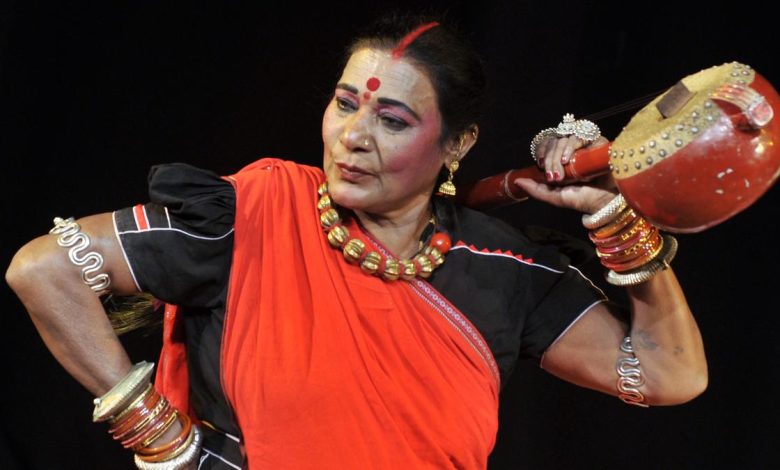
Discover how Teejan Bai revolutionized Pandavani, broke gender barriers, and became one of India’s most celebrated folk artists, leaving behind a remarkable cultural legacy.

Renowned folk artist Teejan Bai, who recently passed away, was widely recognized for bringing the traditional storytelling art of Pandavani from the remote villages of Chhattisgarh to the global stage. Her pioneering work challenged deep-rooted patriarchal norms, redefining the role of women in folk performance arts and inspiring countless artists both within India and abroad.
Teejan Bai’s journey began in a small village where the rich heritage of Pandavani was largely confined to the local community. Traditionally a male-dominated art form, Pandavani narrates episodes from the Indian epic Mahabharata through song and dramatic expression. Despite societal restrictions and limited opportunities for female performers, Teejan Bai dedicated herself to mastering this craft, displaying remarkable skill and emotive power that captivated audiences.
Her groundbreaking performances in the 1980s and 1990s brought widespread attention to Pandavani. She became an emblem of cultural pride and an advocate for women’s empowerment. By refusing to be confined by conventional gender roles, she expanded the possibilities for female artists across India.
Internationally, Teejan Bai toured extensively, performing at prestigious cultural festivals and venues in Europe, the United States, and Asia. Her nuanced storytelling and dynamic stage presence earned her critical acclaim and numerous accolades, including the Padma Shri and Padma Bhushan awards from the Government of India.
Beyond her artistic achievements, Teejan Bai’s legacy embodies resilience and the transformative power of folk traditions. She highlighted the universal relevance of Pandavani’s themes—valor, morality, and human emotion—ensuring the art form’s survival and growth in a rapidly modernizing world.
As the news of her passing reverberated throughout the cultural community, tributes poured in from fellow performers, scholars, and admirers who celebrated her role as a trailblazer and cultural ambassador. Her life and work continue to inspire efforts to preserve and promote indigenous art forms while challenging societal barriers.
Teejan Bai’s story reminds us that folk traditions are living legacies shaped by the courage and vision of individuals who dare to break barriers. Her contributions will remain a beacon for future generations passionate about maintaining India’s diverse artistic heritage.