

Supreme Court Stays Bulldozer Action, Makes Strong Remarks on Illegal Construction
The Supreme Court has reiterated that authorities cannot carry out arbitrary demolitions and must follow due legal process while taking action against allegedly illegal constructions.
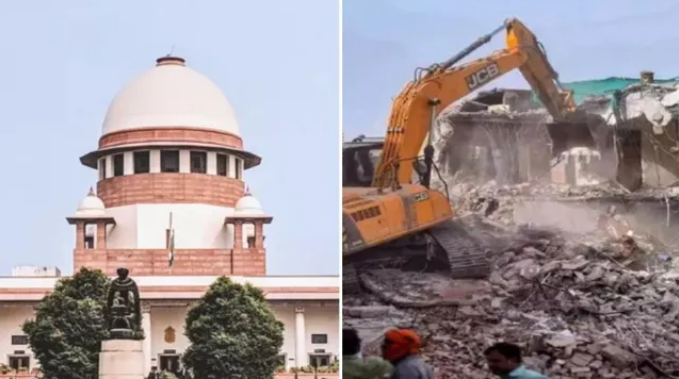
The Supreme Court has once again made important observations regarding so-called “bulldozer action” against allegedly illegal constructions. The court emphasised that demolition cannot be carried out arbitrarily and that authorities must follow the procedure established by law before taking such action.

The court’s observations have renewed discussion around the use of demolition drives by government authorities. The Supreme Court made it clear that action against illegal construction must be based on applicable laws and cannot be used as a form of punishment without following due process.
What Did the Supreme Court Say?
The Supreme Court referred to its earlier directions concerning bulldozer action and stressed that authorities must comply with legal procedures before demolishing any property.
The court indicated that affected parties should be given appropriate notice and an opportunity to respond before demolition action is taken, except in situations where specific legal exceptions may apply.
Authorities are expected to ensure that demolition proceedings are transparent, lawful and supported by proper documentation.
‘No Protection for Illegal Construction’
At the same time, the Supreme Court clarified that its directions should not be interpreted as providing blanket protection to genuinely illegal or unauthorised constructions.
If a structure violates applicable laws, authorities retain the power to take action. However, such action must be carried out strictly in accordance with the law and prescribed procedures.
The court’s objective is to prevent arbitrary demolition while ensuring that legitimate enforcement against illegal construction can continue.
High Court to Hear Contempt Petition
The Supreme Court also addressed issues related to compliance with its earlier directions. Where allegations arise that authorities have violated binding judicial orders, the appropriate courts may examine the matter and determine whether contempt proceedings or other legal action are warranted.
The case highlights the importance of government authorities following judicial directions and ensuring that demolition drives comply with constitutional and procedural safeguards.
Guidelines Applicable Across the Country
The Supreme Court’s broader guidelines on demolition actions are significant for authorities across India. Before taking action against a property, officials are generally expected to follow the applicable legal procedure, including issuing notices and allowing affected parties an opportunity to respond where required.
The ruling seeks to strike a balance between the government’s power to act against unauthorised construction and an individual’s right to due process.
The Supreme Court’s position remains clear: illegal construction does not automatically receive protection, but demolition cannot be carried out arbitrarily or as an immediate punitive measure without following the law.