

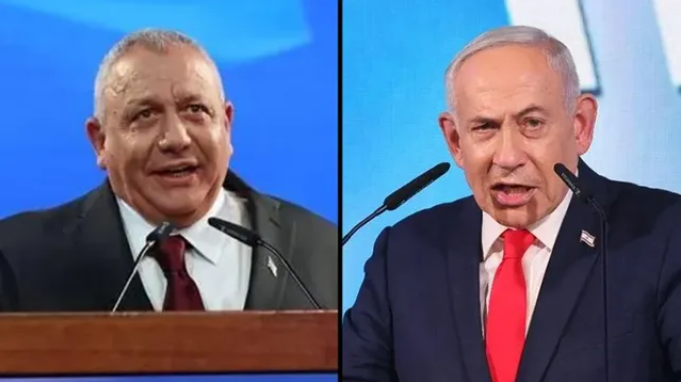
Jerusalem, Israel: Israel’s political landscape has witnessed a major development after President Isaac Herzog decided on Saturday to assign former military chief and centrist leader Gadi Eisenkot the responsibility of forming a new government. The decision is being viewed as a significant political setback for Prime Minister Benjamin Netanyahu. However, Eisenkot will still need to secure a parliamentary majority to form the government.
The parliamentary elections held on October 27 failed to give any political alliance a clear majority. The coalition led by Eisenkot secured 48 seats, while Netanyahu’s alliance won 53 seats. In Israel’s 120-member parliament, the Knesset, a minimum of 61 lawmakers’ support is required to form a government.
67 Lawmakers Back Eisenkot’s Bid to Form Government
During consultations between the President and political parties, 67 lawmakers recommended giving Eisenkot the opportunity to form the next government. Meanwhile, 46 lawmakers supported Netanyahu.
The backing of 19 lawmakers from Arab parties has strengthened Eisenkot’s claim to form the government.
However, the recommendation of these 67 lawmakers does not necessarily mean that all the parties are willing to join his proposed government. Eisenkot will have to overcome several political differences and negotiate with different parties to build a stable coalition.
Forming a Government Will Not Be Easy
Eisenkot has outlined several key political positions, including recognising Hamas as a terrorist organisation and eliminating its military capabilities. He has also supported mandatory military service for all eligible citizens.
In addition, he has emphasised the importance of preserving Israel’s Jewish national identity and democratic system.
His biggest challenge now is to secure a stable majority in parliament. If he succeeds in forming a government, Netanyahu could lose his position as Prime Minister.
For now, the formation of Israel’s next government will depend on political negotiations, coalition agreements and Eisenkot’s ability to secure the necessary parliamentary support.