

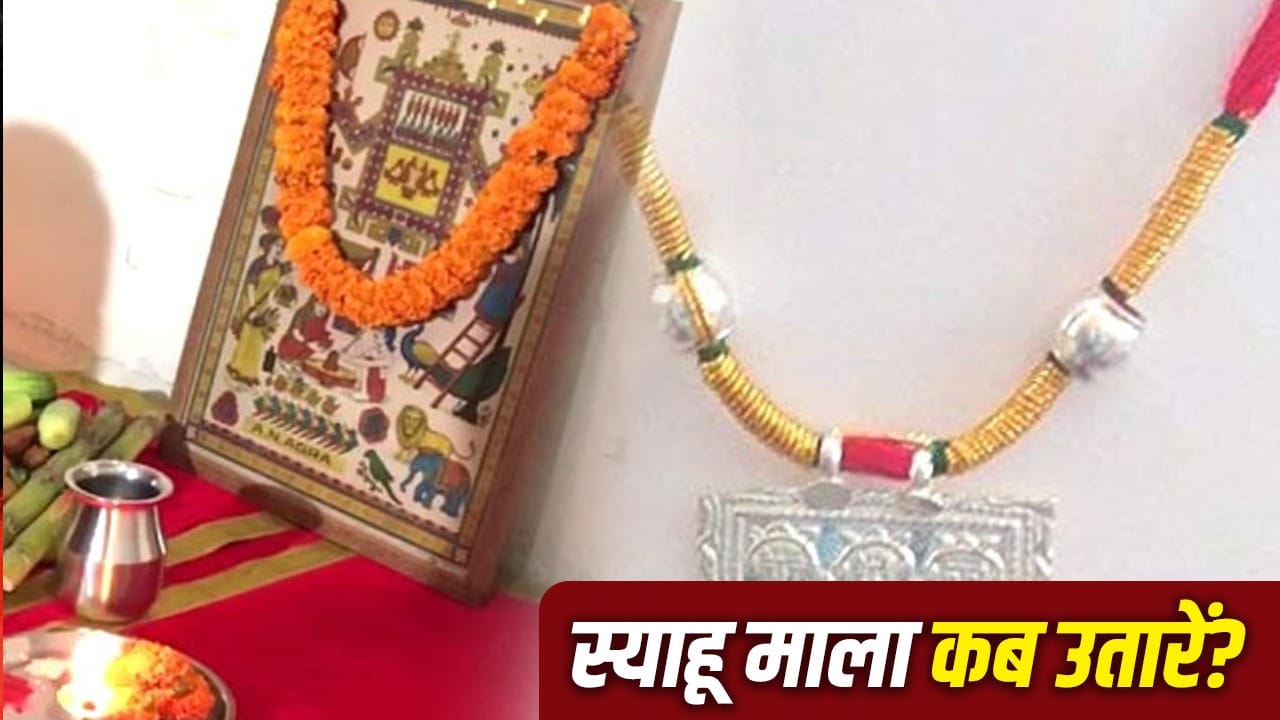
Ahoi Ashtami fasting and the tradition of wearing the Siyahu mala are observed to pray for the long life, health, and well-being of children. This year, the Ahoi Ashtami fast will be held on Sunday, November 1, 2026. Mothers observe a strict fast without water throughout the day and perform a detailed evening puja of Ahoi Mata.
Significance of Siyahu Mala
The silver Siyahu mala, also called Ahoi mala, holds special importance in the Ahoi Ashtami rituals. It symbolizes the unbreakable bond between mother and child and is believed to bring blessings of prosperity and longevity for children. Made with a thin silver chain or red thread, the mala usually features small silver beads and a distinctive pendant shaped like Siyahu, representing Ahoi Mata.
Many families maintain the tradition of adding a silver bead to the mala annually, often matching the number of children or years. Wearing the mala represents a spiritual connection and the mother’s prayers during this auspicious day.
When and How to Wear the Siyahu Mala
On the evening of Ahoi Ashtami, the mala is first placed before the image of Ahoi Mata and worshiped with roli (red powder) and akshat (uncooked rice). Following the recitation of the fast’s story and offering prayers to the stars instead of the moon, mothers wear the mala as a mark of receiving Ahoi Mata’s blessings.
The mala is tied around the neck using a red thread, mauli, or silver chain, ensuring it is kept clean and handled with respect. Worship is always performed before wearing the mala. This practice is believed to reinforce the fast’s prayers and promises.
The mala is traditionally worn until Diwali, after which specific rituals are observed to remove it. The most auspicious time to take off the mala is on Diwali after the Lakshmi puja. In some families, it is also removed during Govardhan Puja or Bhai Dooj, depending on household customs.
After removal, the mala is cleansed with raw milk and holy water from the Ganges River, then dried and wrapped carefully in a clean red cloth for safekeeping. This ensures the mala is preserved well for reuse in the following year’s Ahoi Ashtami devotion. Many families continue the practice of adding a new silver bead to the mala every year.
There are certain family beliefs regarding menstruation during Ahoi Ashtami as well. In households where menstruation coincides with the fast, women refrain from touching the silver beads or mala directly. Instead, another family member places the mala for worship and carries out the ritual rites.