

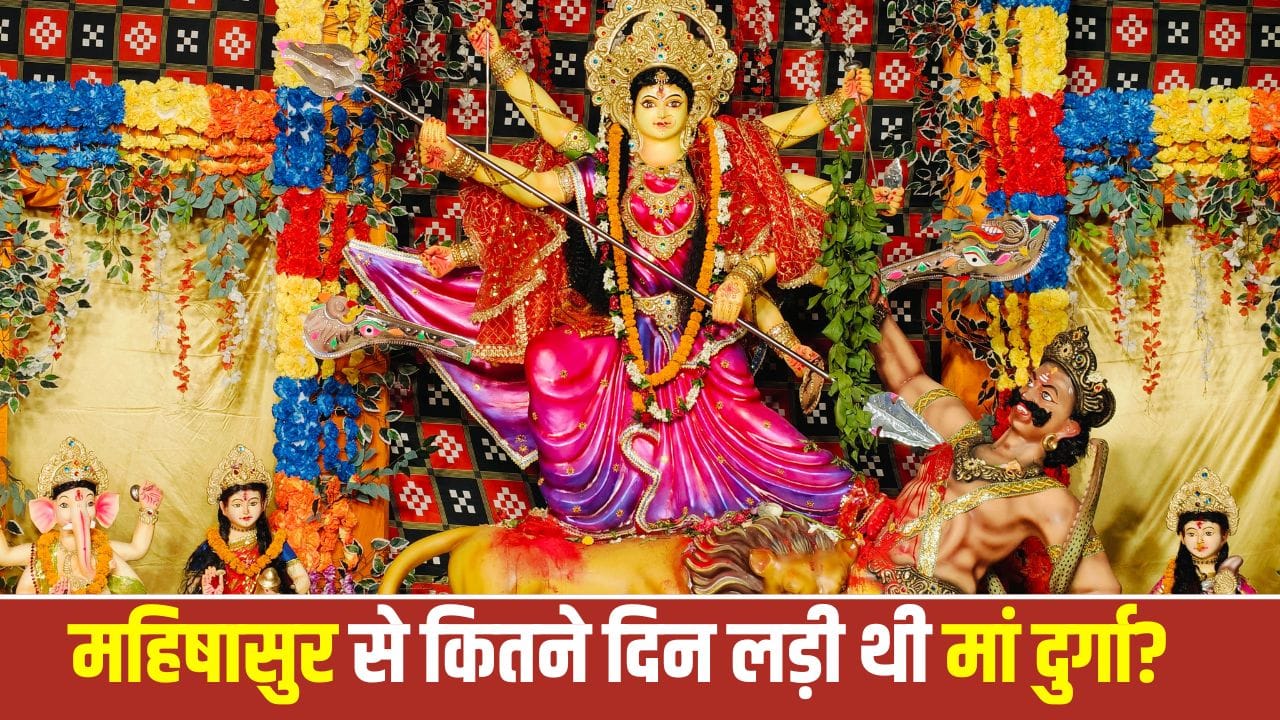
Shardiya Navratri 2026 celebrates the worship of Maa Durga, commemorating her fierce battle against the demon Mahishasura. According to Hindu mythology, Mahishasura was a powerful demon whose arrogance grew after he received a boon from Lord Brahma. He began troubling the gods, forcing them to seek the divine intervention of Maa Durga. This article explores the duration and significance of the battle between the goddess and the demon.
The Nine-Day Battle and Its Significance
Popular religious belief holds that Maa Durga fought Mahishasura for nine intense days, finally slaying him on the tenth day. This event is closely linked to the festival of Shardiya Navratri and Vijayadashami. While the Devi Mahatmya text details the war, the nine days of battle culminating in the demon’s defeat on the tenth are particularly emphasized in traditional observances.
Mahishasura was a formidable demon who gained immense power through severe penance directed at Lord Brahma. His boon made him nearly invincible, which filled him with arrogance and led to his tormenting the gods. Unable to counter his tyranny alone, the gods approached Lord Brahma, Vishnu, and Shiva for help. They combined their divine energies to create Maa Durga, equipping her with celestial weapons to face the demon.
The Story in Devi Mahatmya
The Devi Mahatmya, also known as Durga Saptashati, is a significant section of the Markandeya Purana that narrates the goddess’s power and her battle against Mahishasura. According to the scripture, the demon frequently changed forms during the battle, from a buffalo to various other shapes, to challenge Maa Durga. She confronted each form bravely and eventually triumphed, ending his reign of terror and restoring peace for the gods.
The goddess is portrayed as a symbol of strength, courage, and righteousness in this tale. Her victory over Mahishasura symbolizes the triumph of good over evil and dharma over adharma. This narrative inspires devotees, making the festival of Navratri a sacred time to reflect on these values.
Navratri and Vijayadashami Traditions
The nine days of Navratri are dedicated to the worship of Maa Durga in her various forms. Devotees observe fasts, perform rituals, and recite the Durga Saptashati during this period. These practices honor the goddess’s power and the nine-day war against Mahishasura. The tenth day, Vijayadashami, celebrates the decisive victory of the goddess and is seen as a symbol of the victory of good over evil.
Vijayadashami, also called Dussehra, is observed differently across India. In some regions, effigies of the demon king Ravana are burnt to represent the destruction of evil. In areas devoted to Maa Durga’s worship, it marks the immersion of the goddess’s idols, symbolizing her victory and eventual return to the divine abode. This day highlights the moral that justice and righteousness will always prevail.
Overall, the story of Maa Durga and Mahishasura continues to be a potent spiritual narrative for millions. It highlights divine power, courage, and the eternal struggle between good and evil. The observance of Shardiya Navratri and Vijayadashami each year recalls this timeless legend and its meaningful lessons for society.

