

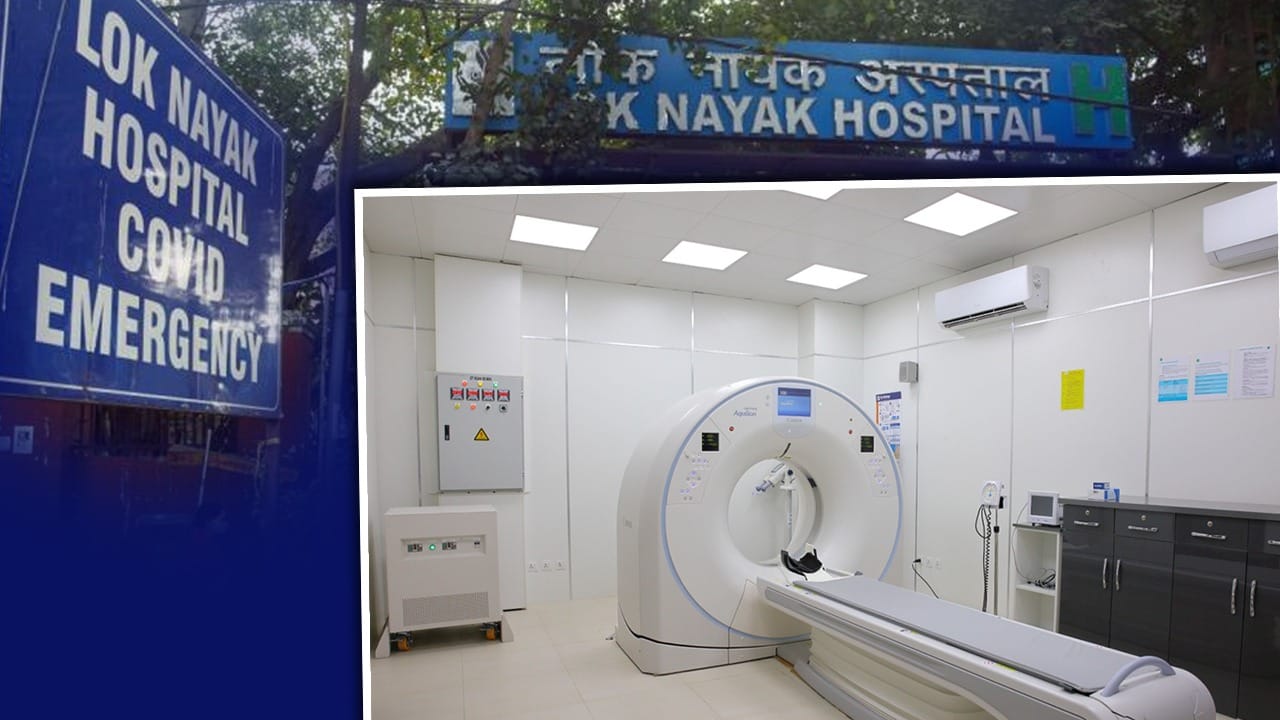
Delhi government is set to upgrade Lok Nayak Hospital with cutting-edge third generation dual source CT scan and 3-Tesla MRI systems. These advanced machines will enhance diagnostic facilities, enabling more accurate and timely detection of critical illnesses. Patients with emergencies, trauma, heart diseases, cancer, and neurological cases will benefit significantly from these upgrades.
Modern Diagnostic Technology at Lok Nayak Hospital
Health Minister Dr. Pankaj Kumar Singh emphasized that these state-of-the-art diagnostic tools will strengthen the hospital’s health infrastructure. The high-speed CT scanner and advanced MRI will allow rapid and precise identification of serious health conditions, improving treatment outcomes.
Dr. Singh also highlighted Delhi Chief Minister Rekha Gupta’s commitment to expanding modern healthcare facilities across government hospitals to provide better services for citizens.
The third generation dual source CT scanner to be installed will deliver very fast and high-quality imaging. It is capable of scanning the entire chest in less than one second, a critical feature for patients arriving with trauma or emergencies. The scanner can generate very thin image slices, down to 0.5 millimeters, allowing detailed examination of internal structures.
Enhanced Imaging with Reduced Radiation
This CT scanner incorporates technology to adjust radiation doses as needed, minimizing patient exposure during scans. Additionally, it can identify chemical composition of kidney stones and uric acid crystal deposits related to gout without extra radiation, aiding in precise diagnosis.
The 3-Tesla MRI installed will offer superior image quality and faster scanning times. Its 70-centimeter wide bore will enhance patient comfort during tests. Equipped with digital advancements and high-performance gradients, the MRI will support detailed evaluations of multiple organs.
Neurology, angiography, cardiac imaging, oncology, breast imaging, urology, and orthopedics will gain from this MRI’s capabilities. It will also help diagnose strokes, cancer, heart disease, and musculoskeletal disorders, while improving pediatric diagnostic services.
These technological additions will not only benefit patients receiving advanced diagnostic care but also enhance medical training for doctors and students. Furthermore, higher quality clinical research will be facilitated. Delhi government aims to expand such advanced medical equipment in public hospitals to ensure early detection and better treatment options for patients.

